
Article summary
- An AI content workflow is a controlled process, not a prompt that publishes automatically.
- The strongest inputs are approved service details, customer questions, website pages and a clear brief.
- Human review should check facts, tone, privacy, links, accessibility and commercial claims before publication.
- A small business should start with one recurring, low-risk content format and automate only stable steps.
Key takeaways
- Define the business goal, audience and responsible owner before choosing tools.
- Separate drafting access from approval and publishing permissions.
- Keep the source of important facts visible to reviewers.
- Measure qualified visits, enquiries, accuracy and maintenance effort instead of content volume alone.
An AI content workflow is more than a prompt
AI can create a draft quickly. That does not mean the draft is ready for customers.
A reliable workflow defines where ideas come from, which facts are approved, who reviews the output, where it is published and how it is updated. The goal is not maximum volume. The goal is useful content that remains accurate and supports a clear business action.
Start with approved source material
Give the system information it is allowed to use:
- current service descriptions;
- approved prices and package scope;
- real customer questions;
- existing website pages;
- brand terminology;
- privacy and legal boundaries.
Avoid asking a model to invent proof, statistics or customer results. When a fact matters, keep its source visible to the reviewer.
Use five clear stages
A practical small-business workflow can be:
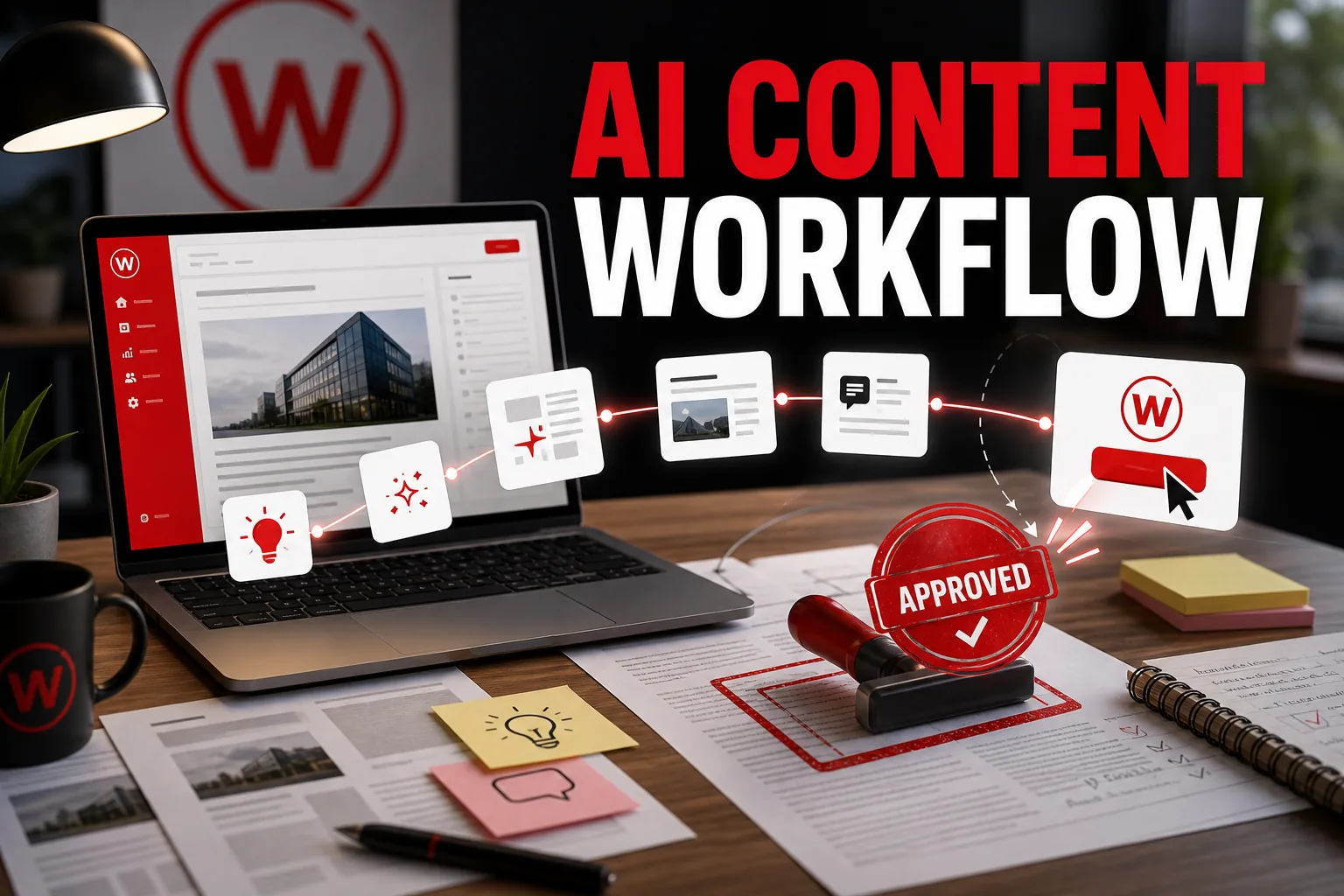
1. Brief: define audience, search intent, format and next step. 2. Context: collect approved facts, links and examples. 3. Draft: create an outline and first version. 4. Review: check accuracy, tone, privacy, links and accessibility. 5. Publish and measure: release through the website and track useful outcomes.
This structure can support blog posts, newsletters, service-page updates and social adaptations.
Keep people at the approval point
Human review is especially important for pricing, legal language, medical or financial topics, personal data, comparisons and promises.
The reviewer should be able to reject the draft, correct the source material and record why a change was made. Publishing access should remain separate from drafting access until the workflow is dependable.
Connect the workflow to the website
A useful workflow does not end with a document in a folder. It should produce content that fits the website architecture, metadata, internal links, image requirements and conversion path.
For example, an article can link to services and pricing, business automation and the contact page. Shared calls to action should remain in the article template so editors do not copy inconsistent CTA code into every post.
Measure quality, not only output
Track whether the content:
- reaches the intended audience;
- answers the target question;
- leads visitors to relevant services;
- generates qualified enquiries;
- stays accurate after services or prices change;
- reduces repetitive editing work.
Publishing more pages is not automatically a success. A smaller library of maintained, connected content is often more valuable.
Start with a sensible first implementation
Choose one recurring content type. Document the current manual process, then identify where AI can save time without removing necessary judgement.
A first version may use a structured brief, approved source folder, drafting prompt, review checklist and manual publishing step. Later, automation can create tasks, suggest internal links, prepare translations or notify the reviewer.
The right system is the one your business can understand, own and maintain.
Turn the workflow into a repeatable content pipeline
A useful content workflow is more than prompting a chatbot. It connects approved sources, a structured brief, drafting, checks, human approval and publishing so the team can repeat the process without losing quality.
See the AI content pipeline service if you want this workflow connected to your website, analytics or publishing process.