
Article summary
- Learn how to create a small business website that builds trust, looks professional, and helps bring in more customers.
- A small business website should do more than exist. It should help visitors understand your offer, trust your business and take the next step.
- Audience: Small business owners, local service providers, consultants, restaurants and shops.
- Why a small business website matters
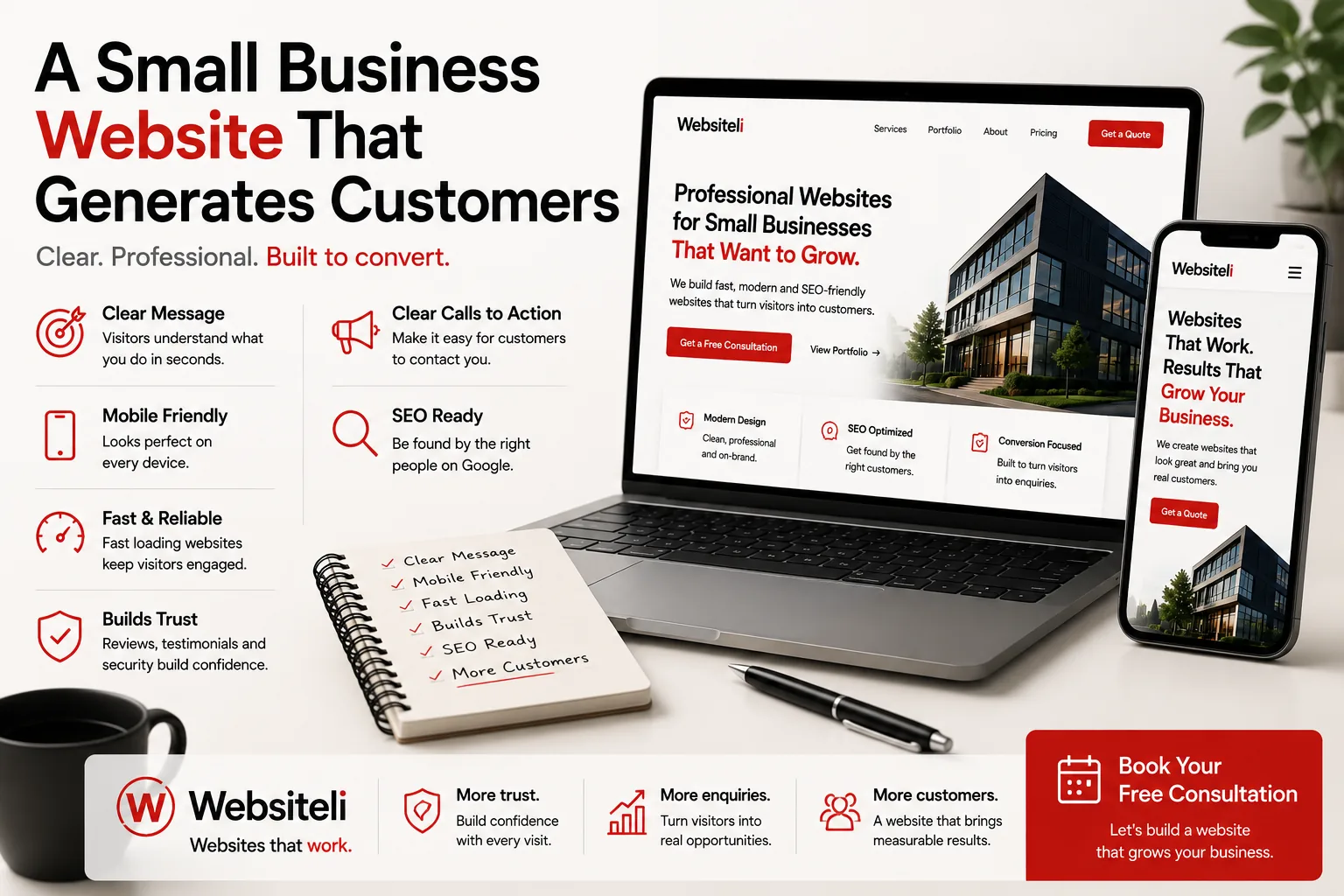
- A small business website should do more than exist online. It should help people understand what you do, trust your business and take the next step. For many small companies, the website is the first impression, the sales assistant and the credibility check all in one.
- Important point: Clear headline and message.
- Important point: Easy navigation.
- Important point: Strong trust signals.
Key takeaways
- Focus on why a small business website matters.
- Focus on what a customer-generating business website needs.
- Focus on step 1: define your goal and audience.
- Focus on step 2: choose a simple, professional structure.
- Focus on step 3: write clear messaging that builds trust.
- Focus on step 4: add the right pages.
- Clear headline and message
Why a small business website matters
A small business website should do more than exist online. It should help people understand what you do, trust your business and take the next step. For many small companies, the website is the first impression, the sales assistant and the credibility check all in one.
If your website is unclear, slow, outdated or hard to use, visitors leave. If it is simple, professional and focused, it can turn visits into enquiries, bookings, calls and sales.
What a customer-generating business website needs
A customer-generating business website has one main job: make it easy for the right people to understand your offer and contact your business easily. Most visitors are not looking for fancy effects. They want answers fast.
A professional website should reduce confusion, not create it. It should guide visitors naturally from interest to action.
- Clear headline and message
- Easy navigation
- Strong trust signals
- Simple contact options
- Mobile-friendly layout
- Basic SEO setup
- Helpful content that matches search intent
Step 1: Define your goal and audience
Before you build anything, be clear about the purpose of your website. A website for business should not try to do everything at once. It should focus on one or two main goals.
Then define your audience. When you understand who you want to attract and what questions they ask before contacting you, it becomes much easier to write effective content.
- Calls
- Enquiries
- Bookings
- Sales
- Trust before an in-person visit
Step 2: Choose a simple, professional structure
A professional website does not need to be complicated. Too much complexity can hurt results because people cannot quickly find what they need.
Keep the menu short and clear. Avoid creative labels that sound clever but confuse users. People should know exactly where to click.
- Home
- Services or Products
- About
- Contact
- Optional FAQ or blog
Step 3: Write clear messaging that builds trust
Your website copy should be simple, direct and customer-focused. Avoid long paragraphs full of jargon. Use language your audience would actually use.
Good messaging answers the most important questions fast: what you offer, how it helps, why people should trust you and what happens next.
Step 4: Add the right pages
Not every small business website needs ten or twenty pages. It needs the right pages. A focused structure is easier for visitors and easier for search engines to understand.
Most businesses need a homepage, service or product page, about page, contact page and, when useful, FAQ or resource content. If you run a local business, include location-specific details.
Step 5: Make the website easy to use on mobile
A large share of visitors will view your website on a phone. If the mobile experience is poor, you lose opportunities before people even understand your offer.
Test your site on different devices. Try to complete key actions yourself, like calling, filling out a form or checking services. If it feels frustrating, visitors will likely feel the same.
- Readable text without zooming
- Buttons that are easy to tap
- Fast loading pages
- Simple navigation
- Short forms
- No cluttered layouts
Step 6: Optimize for search engines
A small business website can only generate customers if people can find it. Basic search optimization helps your website appear when people search for relevant services.
SEO is not about stuffing keywords into pages. It is about helping search engines and users understand your content. Start with clear titles, descriptive URLs, useful headings, fast pages and helpful content.
Step 7: Add clear calls to action
Every page should guide the visitor toward one next step. A website that lacks direction may get traffic but fail to turn that traffic into leads.
Good calls to action are visible, specific and easy to click. Use them in the header, on the homepage, after service descriptions and at the end of important pages.
- Get a quote
- Book a call
- Contact us
- Request more information
- Send an enquiry
Common mistakes to avoid
Many small business websites fail for simple reasons. The design might look acceptable, but visitors still cannot understand the offer or find the next step.
Avoid unclear headlines, hidden contact details, confusing navigation, poor mobile experience, generic copy, missing SEO basics and forms that ask for too much too soon.
How to know if your website is working
A business website should be measured. You do not need a complicated dashboard at the beginning, but you should know whether people are visiting, which pages they use and whether they contact you.
Track enquiries, calls, bookings, newsletter signups and important button clicks. Over time, this helps you improve the pages that matter most.
Conclusion
A well-built small business website does not need to be complicated. It needs to be clear, trustworthy, mobile-friendly, search-friendly and easy to act on.
If you want more practical website tips, sign up for the Websiteli newsletter or ask for a consultation so we can look at your website, SEO and conversion path together.