
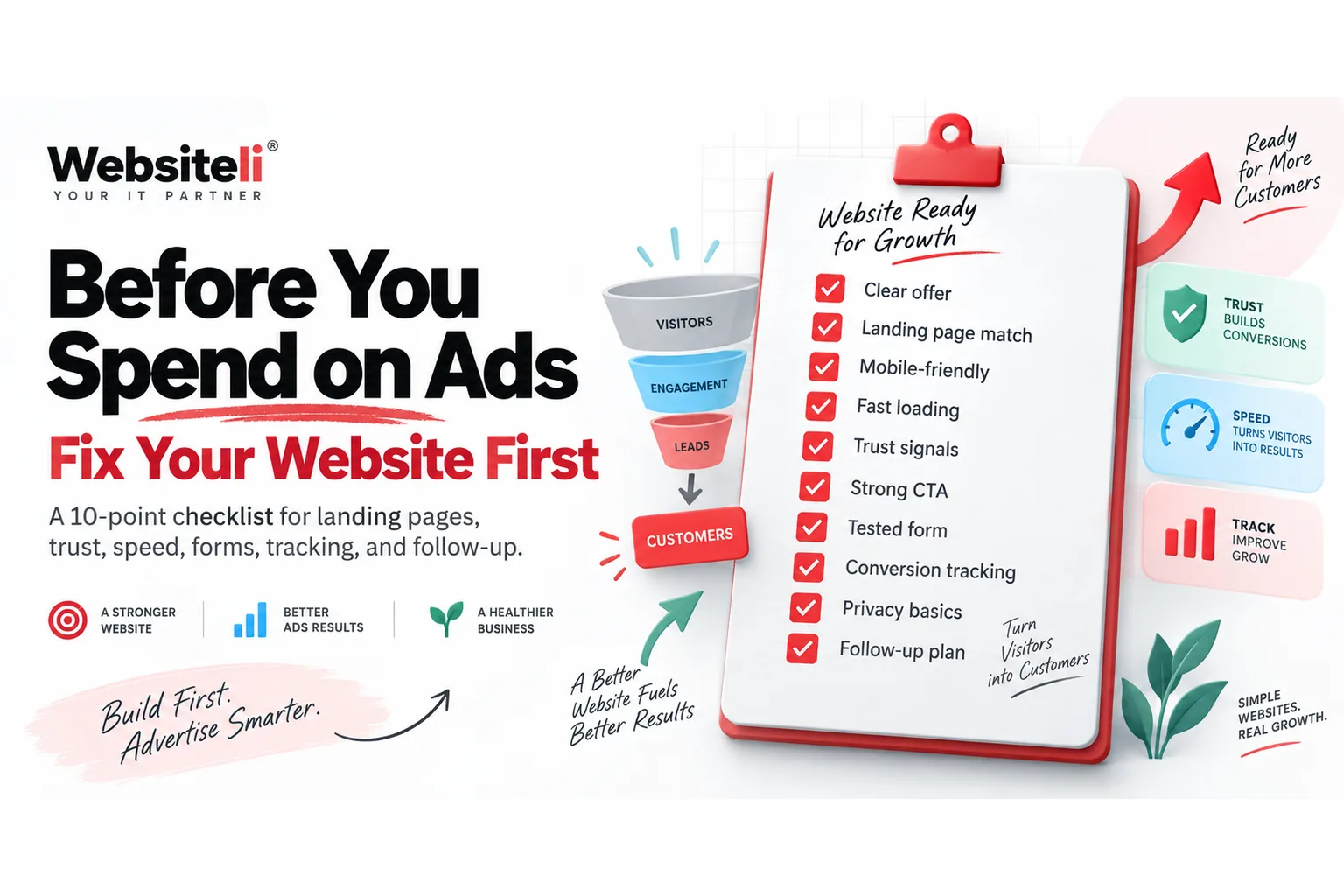
Article summary
- Paid advertising amplifies the strengths and weaknesses of the page receiving the traffic.
- A campaign needs one clear offer, a relevant landing page and an easy next step for the visitor.
- Mobile usability, trust signals, working forms and fast loading should be checked before increasing traffic.
- Conversion tracking and a defined follow-up process are necessary if you want to know whether ads produce useful enquiries.
Key takeaways
- Fix the conversion path before increasing the number of visitors.
- Send each campaign to the most relevant page instead of automatically using the homepage.
- Test the complete journey on a real phone, including the form and confirmation step.
- Measure meaningful actions such as qualified enquiries, bookings or quote requests rather than clicks alone.
Advertising amplifies the website you already have
Paid traffic can bring the right people to your site faster, but it does not automatically make the site persuasive. If the offer is unclear, the form is broken or the page is difficult to use on a phone, buying more visits simply exposes those problems to more people.
Before increasing traffic, make sure the page can turn a relevant visitor into a useful business action.
1. A clear offer for a specific audience
A visitor should be able to understand three things within a few seconds: what you offer, who it is for and why the next step is worth taking.
Avoid sending ad traffic to a page dominated by vague claims such as “quality solutions” or “we care about our customers”. Use concrete service wording, useful scope information and a visible next action.
2. A landing page that matches the ad
The destination should continue the promise made in the ad. If someone clicks an ad about a specific service, do not make them search through the homepage to find it.
A relevant service or landing page should repeat the core promise, answer the most likely questions and remove unrelated distractions.
3. A strong mobile experience
Many ad clicks happen on phones. Test the real page on a normal mobile connection, not only in a desktop preview.
Check that text is readable, buttons are easy to tap, navigation does not cover the page, forms do not require excessive typing and important information appears before long decorative sections.
4. Fast, stable loading
A page does not need to be technically perfect, but it should feel responsive and stable. Compress oversized media, avoid unnecessary scripts and check that layout shifts do not move buttons while the visitor is trying to use them.
If the campaign page feels slow before the campaign starts, more traffic will not improve it.
5. Trust signals that support the decision
Visitors arriving from an ad may know little about the business. Give them enough evidence to judge whether contacting you feels safe and worthwhile.
Useful trust signals can include clear business information, real contact details, transparent service scope, portfolio examples, credentials when relevant, understandable policies and honest explanations of what happens after an enquiry.
Do not invent reviews, rankings, customer results or guarantees.
6. One obvious conversion action
Decide what success means before you launch the campaign. It may be a quote request, booked call, purchase, reservation or qualified contact form.
The primary action should be visible, easy to understand and usable without unnecessary steps. Avoid asking for information you do not need at the first contact.
7. A form that has been tested end to end
Submit the form yourself from desktop and mobile. Check validation, confirmation messages, email delivery and where the lead is stored.
Also check the failure path. A visitor should not lose everything they typed because one field is invalid or a service is temporarily unavailable.
8. Analytics and conversion tracking
Campaign dashboards can tell you how many people clicked. Your own measurement should tell you whether those visitors completed the business action you care about.
Verify analytics before launch and test the actual conversion event. Use consistent campaign parameters and make sure internal navigation does not destroy attribution unnecessarily.
The goal is not to collect every possible metric. It is to understand which traffic produces useful outcomes.
9. Privacy and cookie handling appropriate to your setup
Advertising often adds tracking technologies. Review your privacy information, consent setup and any analytics or advertising tags you use. Requirements depend on your business, audience and technology, so do not treat a generic banner as legal advice.
At a practical level, visitors should be able to understand what is collected and your tracking setup should behave the way your published choices say it behaves.
10. A follow-up process after the conversion
A form submission is not the end of the funnel. Decide who receives the enquiry, how quickly it is reviewed, what information is sent automatically and when a human follows up.
A campaign can appear unsuccessful when the real problem is slow or inconsistent lead handling.
Run a five-minute preflight test
Before spending money, open the campaign page on a phone and complete the journey as if you were a new customer. Ask someone unfamiliar with the page to do the same.
Can they explain the offer? Can they find the next step? Does the form work? Does the confirmation arrive? Can you see the conversion in analytics?
If the answer is yes, you have a much better foundation for learning from paid traffic.
Improve the website before buying more traffic
Websiteli builds and improves small-business websites around clear offers, measurable conversion paths and maintainable content. Explore services and pricing, see the portfolio or contact Websiteli if you want a campaign page or website reviewed before you increase advertising spend.