
Article summary
- Good first automation projects are frequent, rule-based, stable and easy to verify.
- Automating a broken or unclear process usually makes the problem harder to see.
- Small businesses should begin with one narrow workflow, one owner and one measurable outcome.
- Human approval should remain where errors could affect customers, money, privacy or legal obligations.
Key takeaways
- Map the process before selecting software.
- Prioritise repetitive work with clear inputs and outputs.
- Keep exceptions and high-risk decisions under human control.
- Measure reliability and maintenance effort, not only time saved.
Start with the business problem, not the tool
Automation is useful when it removes a clear operational bottleneck. It is not useful simply because a task can technically be automated.
Before choosing software, describe the current process in plain language:
- what starts the work;
- which information is required;
- who makes each decision;
- where delays or mistakes happen;
- what a correct result looks like.
A small business often gets more value from simplifying the process first than from connecting several new tools.
Use four filters to choose the first workflow
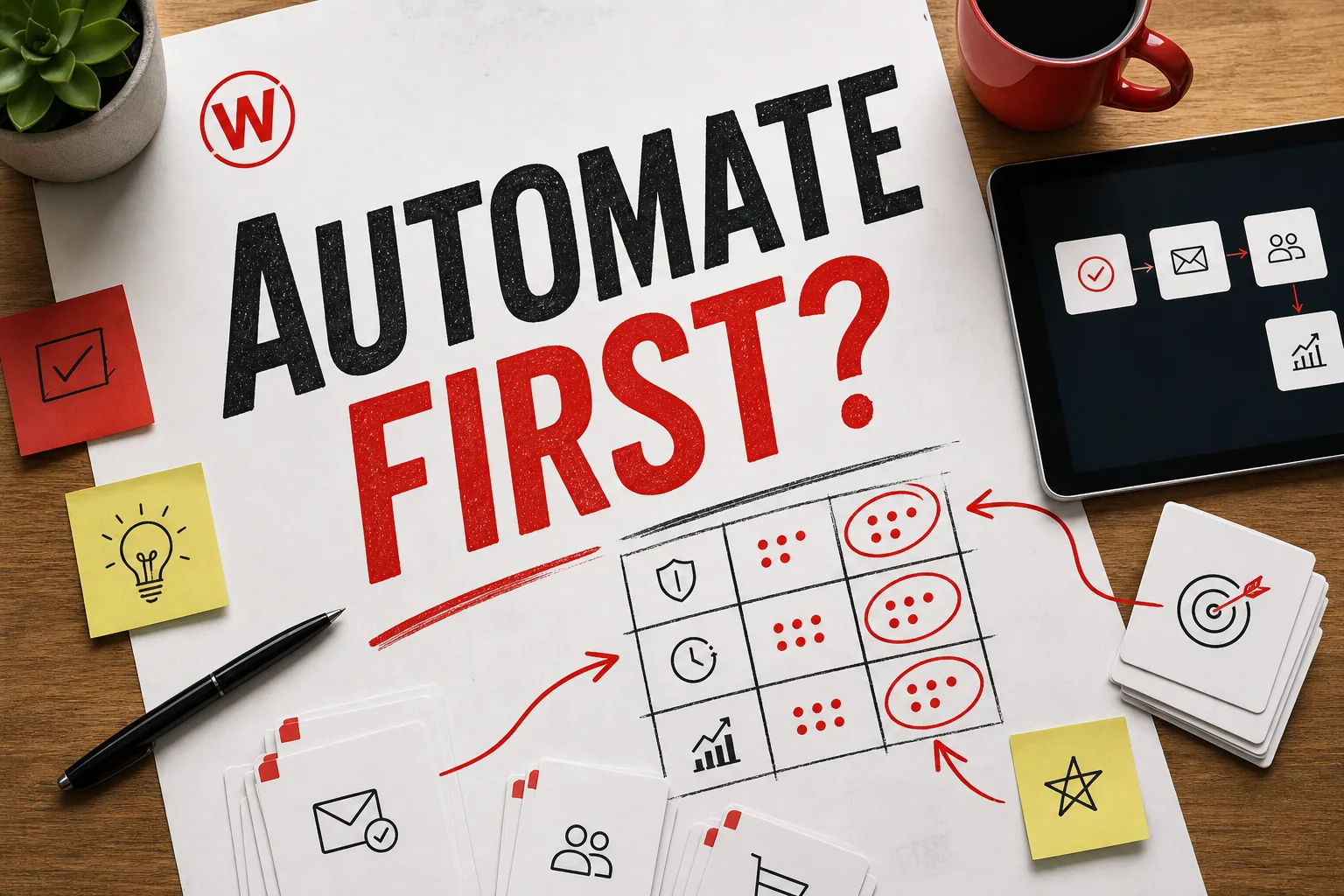
A strong first candidate is frequent, stable, rule-based and measurable.
Frequency matters because an automation used once per quarter may never recover its setup and maintenance effort. Stability matters because a process that changes every week will constantly break. Clear rules make testing possible. A measurable result shows whether the project helped.
Good candidates can include:
- routing website enquiries to the right person;
- sending an approved confirmation after a form submission;
- creating a recurring report from consistent data;
- transferring approved information between two systems;
- reminding a team when a defined follow-up is due.
Avoid unclear or high-risk decisions first
Do not begin with a process nobody can explain consistently. Automation will reproduce ambiguity at greater speed.
Be cautious with legal, medical or financial judgement, personal data, payments, binding commitments, unreliable source information and processes with many exceptions.
Define a small first version
A useful first version should have one trigger, one controlled input, one intended output and one owner.
For example, a website enquiry workflow could receive a form, check required fields, label the enquiry, send an approved acknowledgement, notify the responsible person and record the handover. It should not promise availability, quote an unsupported price or make a binding decision.
Plan for exceptions and maintenance
Decide what happens when information is missing, a system is unavailable or the result looks unusual. Assign responsibility for rules, templates, failed runs, permissions, testing and obsolete steps.
A workflow without an owner becomes technical debt.
Measure the outcome that matters
Track correct routing, manual corrections, failed runs, response time, maintenance time and complaints caused by the workflow. The goal is a more dependable process, not maximum automation.
Connect automation to the website
Many practical workflows begin on the website: a contact form, booking request, newsletter signup or service enquiry.
Websiteli's business automation service can connect these entry points to controlled follow-up processes. The services and pricing page explains broader options, and the contact page is the place to discuss a specific workflow.
A simple decision rule
Choose a process that happens often, follows understandable rules, uses dependable information and can be checked by a person. Start narrow, test real cases and expand only after the first workflow is reliable.