
Article summary
- UTM parameters label campaign links so analytics can distinguish sources, channels and individual campaigns.
- A small business usually needs a simple naming convention more than a complex attribution platform.
- Campaign tracking is useful only when it is connected to meaningful actions such as enquiries, bookings or quote requests.
- Consistent naming matters because variations such as linkedin, LinkedIn and linkedin.com can fragment reporting.
- UTMs should not contain personal or sensitive information because they can appear in URLs, analytics and shared links.
Key takeaways
- Choose a short naming convention before publishing campaign links.
- Use source, medium and campaign consistently; add extra parameters only when they answer a real question.
- Test the complete journey from campaign link to conversion event before relying on reports.
- Measure qualified actions, not campaign clicks alone.
- Keep attribution simple enough that the team will actually maintain it.
What UTM tracking does for a small business
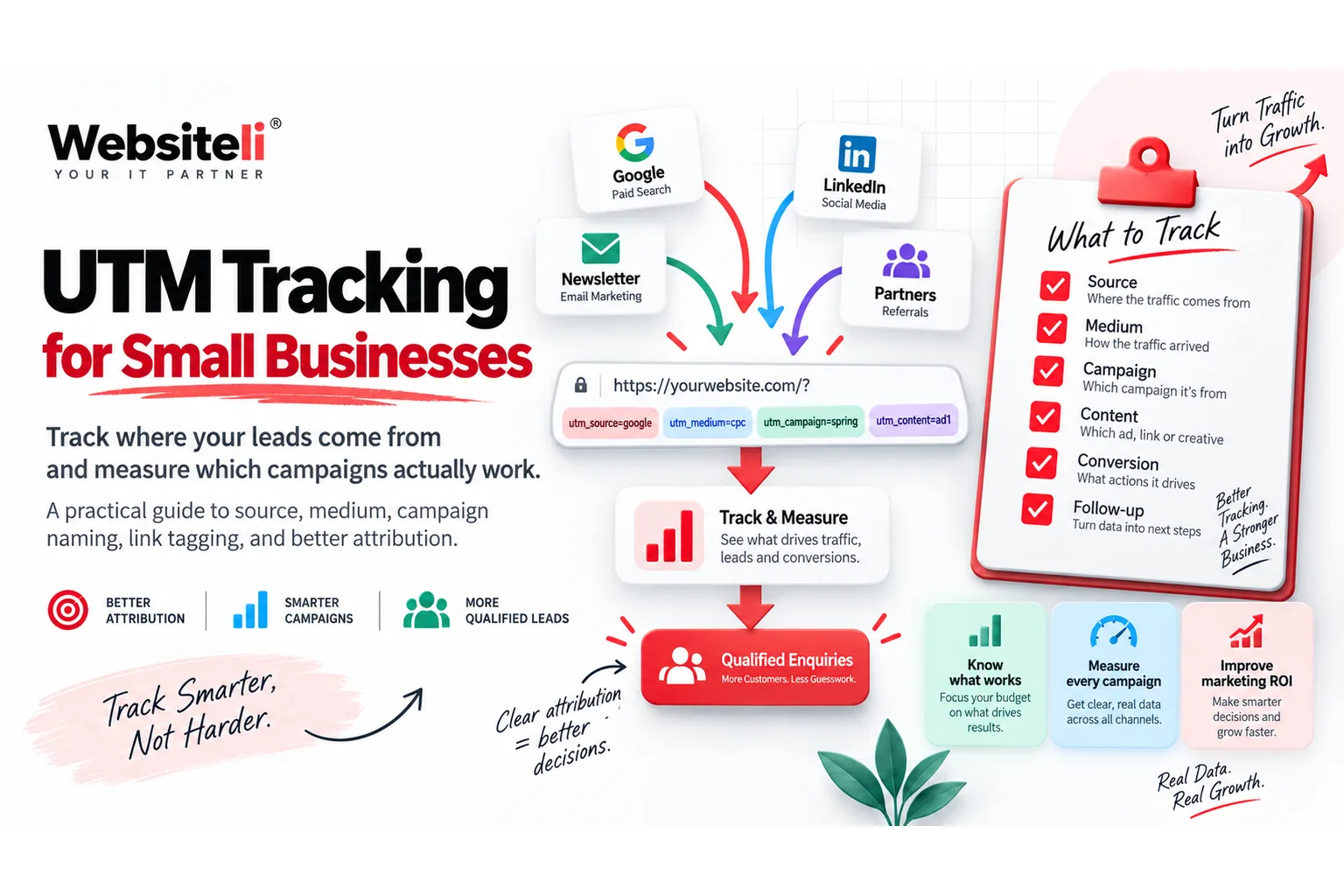
A UTM is a short set of parameters added to a link. When someone clicks that link, analytics tools can record how the visit was labelled. For a small business, the value is practical: you can separate traffic from a LinkedIn post, an email newsletter, a partner referral or a specific paid campaign instead of seeing all visits as one vague pool. UTMs do not prove that marketing caused a sale, but they give you a cleaner record of how a visitor reached the website and which campaigns are associated with useful actions.
Use a simple five-part naming convention
The common parameters are utm_source, utm_medium, utm_campaign, utm_content and utm_term. Most small businesses can start with the first three. Source identifies where the traffic came from, such as linkedin or newsletter. Medium describes the channel type, such as social, email or cpc. Campaign groups links around one initiative, such as spring-consultation-2026. Content can distinguish two creatives or buttons when you genuinely need that comparison. Term is mainly useful when you deliberately track keyword-level information. Keep values lowercase, short and readable.
Choose source, medium and campaign names before publishing
Decide the naming rules before links are distributed. A simple convention might use lowercase words separated by hyphens and a fixed list of approved source and medium values. This avoids reports splitting one channel into several labels because one person used linkedin, another used LinkedIn and another used linkedin.com. Put the convention in a small shared document or spreadsheet. The best system is not the most sophisticated one; it is the one people can repeat correctly without asking for help every time.
Connect campaign visits to real website conversions
UTM reports become useful when they are connected to the actions that matter to the business. A campaign visit is context; an enquiry, booked consultation, reservation, download or quote request is the event you can act on. Before launching a campaign, open the tagged link yourself, complete the intended action and verify that both the campaign information and conversion event appear as expected. If you use a CRM, carry the source information forward where practical so later follow-up can be reviewed alongside the original campaign.
Avoid the tracking mistakes that make reports unreliable
Do not place names, email addresses, customer identifiers or other sensitive information in UTM values. URLs can be copied, logged and shared. Avoid changing naming conventions mid-campaign without a clear reason, and do not tag ordinary internal website navigation with UTMs because that can overwrite the visitor's original acquisition context. Also avoid creating dozens of parameters that nobody reviews. Tracking should reduce uncertainty, not create a second administrative job.
Use UTMs across search, social, email and partnerships
UTMs are useful beyond paid ads. A LinkedIn post can use source=linkedin and medium=social; a newsletter can use source=newsletter and medium=email; a partner link can use the partner name as source and referral as medium. For paid campaigns, keep the naming aligned with the advertising platform and your own reporting needs. The important part is consistency across channels so the same business question can be answered each month: which sources brought relevant visitors, and which of those visitors completed useful actions?
Build a monthly review habit instead of a bigger dashboard
Review a small set of questions every month: which campaigns produced enquiries or bookings, which landing pages received those visits, where did people leave the path, and were leads followed up correctly? Use the answers to improve the weakest part of the journey before adding more channels or more reporting layers. Websiteli can connect lead-generation systems, landing pages and website analytics into a maintainable setup that focuses on business actions rather than vanity metrics.
Lead generation · Landing pages · Business websites · Services and pricing · Contact Websiteli